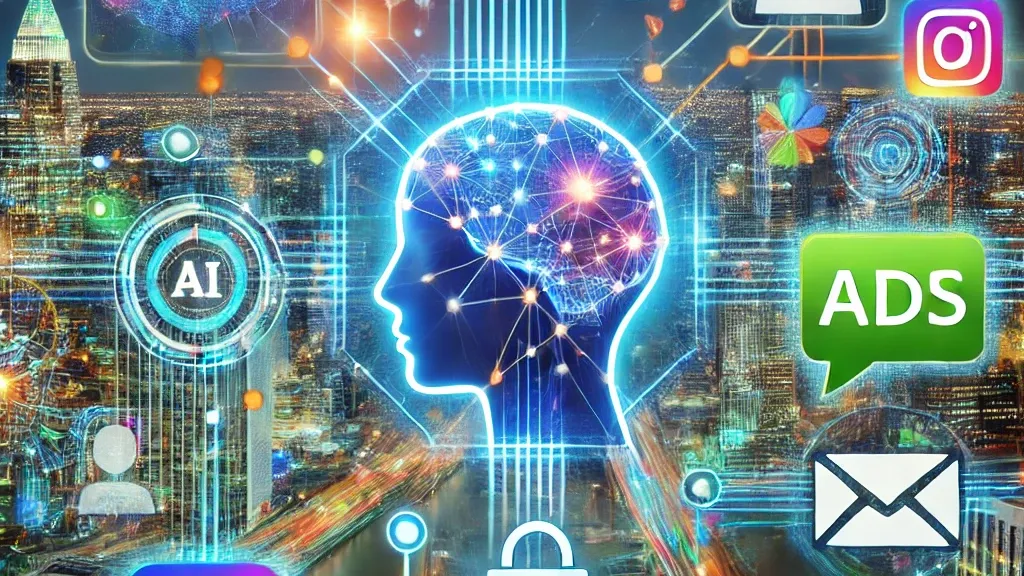
Artificial Intelligence (AI) in digital marketing has evolved from a nice-to-have to a game-changer for today’s marketers.
It’s become a powerful technology to drive personalization, predictive analytics, customer experience, and much more.
That’s why marketing leaders are implementing AI-driven initiatives in their marketing strategies, with many believing the technology will have a ‘big impact’ on productivity (50%), efficiency (45%), and innovation (38%), according to our ‘2024 Global Digital Skills & Training Report: Insights from Corporate Leaders’ report.
In this article, we’ll break down what AI means for digital marketing, examples of its use, challenges and tools (not just ChatGPT), and explore the skills you need to use it to your advantage:
What is AI in digital marketing?
What are the best AI tools for digital marketing?
Examples of AI in digital marketing
How do you use AI in digital marketing?
What are the pros & cons of using AI in digital marketing?
What are the most common skills used in AI-driven digital marketing?
Will AI replace digital marketing?
What is the future of AI in digital marketing?
What is AI in digital marketing?
Artificial intelligence in digital marketing uses the capabilities of the technology such as data collection, natural language processing, machine learning, and analytics to drive better business insights and automate marketing tasks and decisions.
The advantage of AI is that it helps you gain insights into customer behaviors by harvesting vast amounts of data.
This data can be used to respond to and tailor a customer’s needs depending on their actions and preferences. AI is also able to adapt and improve over time using feedback and new data.
It offers great opportunities for marketers to be more effective and personalized. This means customers get relevant content that can be triggered by actions on a site, an ad, or a branded message.
The McKinsey Global Survey on AI finds that organizations are taking steps that drive bottom-line impact such as redesigning workflows as they use generative AI and put senior leaders in critical roles, such as overseeing AI governance. They are also working to mitigate any gen-AI-related risks and hiring new AI-related roles while retraining employees to deploy AI.
What are the best AI tools in digital marketing?
While ChatGPT may be the most talked-about generative AI tool, there are so many more out there that are helping marketers in their daily roles.
They can help marketers with a variety of functions from content generation and automation to SEO and design.
Here are some of the best AI tools out there:
Writer – A highly-rated content generation tool that can repurpose content and includes an AI writing assistant
Midjourney – Generative AI that can convert natural language prompts into images
Optimove – A customer data platform with AI-based marketing functions
Zapier – Helps automate workflows by connecting apps and services that your company uses
Manychat – Provides an interactive customer experience using NLP to respond to customers on social platforms including WhatsApp
Evolv.ai – Uses AI and machine learning algorithms to improve customer experiences in real-time
Surfer SEO – A cloud-based on-page optimization tool that analyzes and compares your pages against what currently ranks on the SERPs
Mailchimp – Uses AI to optimize email campaigns by predicting the best send times and personalizing content
Perplexity – Similar to ChatGPT but more suitable for research as it uses web citations in a clearer way
Drift – An AI chatbot that enhances lead generation and customer interaction
Buffer – Responsible for social media management, offering post scheduling, analytics, and content curation
Tableau – An AI-powered data visualization and intelligence tool that helps marketers analyze data and extract actionable insights
Examples of AI in digital marketing
The power of AI means it can be leveraged across many digital channels. Companies use it for social media campaigns, to automate tasks and processes, and for digital advertising.
Take a look at our 10 eye-opening AI marketing stats in 2025 blog to see how the technology is being leveraged to deliver results.
It can also be used in any industry. Beauty brands use it to deliver a tailored customer experience such as Sephora’s AI chatbot-powered shopping service and its Virtual Artist App.
Using AI and digital innovations, Sephora’s e-commerce sales grew from $580 million in 2016 to over $3 billion, according to Statista.
One of the most successful and well-known for using AI effectively is streaming giant Netflix. The streaming service uses the technology to provide personalized recommendations based on user preferences and behavior.
These choices are based on thousands of data points such as:
User profile information (e.g age, gender, location)
Type of device used to stream
Watch patterns (whether a show was paused, rewound, fast-forwarded)
Whether an entire movie or TV series was completed
Browsing history
How do you use AI in digital marketing?
As AI technologies have become more accessible and easier to use, companies have started to use them in daily tasks such as creating content for pay-per-click (PPC) ads or setting up triggered email workflows.
When we asked our membership community at the Digital Marketing Institute about AI, 60% believe they are familiar with the technology and its applications in marketing, but 37% don’t currently have an AI strategy in their business.
But what’s the impact of AI on marketers and what are they using it for?
1. Generative AI for content and image creation
Marketing teams are often under pressure to create content quickly for many purposes and channels. However, creating good content takes time and effort, and a lot of marketers are time and resource poor.
AI copywriting tools such as ChatGPT and Claude have exploded because they help people to generate content. This could be email subject lines, ad copy, landing pages, blogs, or anything else you need for your content marketing.
You can also use AI writing prompts to create catchy headlines and customize content for your audience which drives personalization and use AI to boost your influencer marketing campaigns and manage your relationships.
Using these tools saves time and money. However, make sure to read over any content before publishing it live to ensure it has personality and fits in with your brand voice.
Speaking of content, you must also remember to optimize your content for AI because the rules have changed in terms of what search engines like Google display for their AI overviews and AI mode. To maintain visibility, you need to update your content, and you can also use the help of AI tools for this.
“People use AI because it’s lower cost and highly scalable. But if you don’t have a good creative platform and it doesn’t come from creative and data-driven insights, then it’s just spray and pray really,” says Mischa McInerney, CMO at the Digital Marketing Institute.
2. Customer service and support
AI-driven chatbots have been around for a while as a way to communicate with and provide information to customers. When people want to get instant answers to simple queries or interact with a brand, they first go to a chatbot.
However, AI has a bigger role when it comes to customers. It can improve customer experience by personalizing content and messaging, anticipating customer needs, streamlining purchasing, and directing queries or concerns to the right department or agent.
3. Understanding your customers better
Knowing your customers is at the heart of effective marketing but understanding them deeply enough to predict what they want next can be challenging. Traditionally, customer segmentation and targeting required hours of manual analysis and guesswork. Now, AI automates and enhances this process, giving marketers powerful insights at scale.
AI algorithms can analyze massive datasets to segment your audience into groups based on shared interests, behaviors, needs, or purchase intent. Instead of broad, one-size-fits-all campaigns, you can now deliver personalized messages that evolve in real time as customer behaviors change.
For example, AI-powered recommendation systems (like those used by Netflix or Amazon) suggest products, services, or offers tailored to each user’s unique preferences. Meanwhile, Natural Language Processing (NLP) tools can scan customer reviews, social media comments, or survey responses to uncover sentiment, recurring pain points, and unmet needs.
These insights help marketers refine their messaging, improve products and services, and build stronger, data-driven relationships with their customers, turning audience understanding into a competitive advantage.
To make this process easier, marketers can use AI-powered customer insight platforms such as Segment, Optimove, or Salesforce Einstein, which specialize in aggregating and analyzing data from multiple channels. These tools help you uncover meaningful patterns, predict customer behaviors, and personalize engagement strategies with precision.
4. SEO
Artificial intelligence has huge potential in the area of search engine optimization (SEO). Search engines such as Google have been using sophisticated algorithms that crawl and index web pages to rank them.
Now, AI is becoming further integrated with that process in a way that is changing the world of search even more, through AI Overviews (previously known as Search Generative Experience (SGE).
AI can automate and improve keyword research and content optimization by analyzing user behavior, along with creating meta tags and headings. Marketers can also use it to predict SEO trends, user behavior, and algorithm updates through predictive SEO.
Voice and visual search are becoming more important ways for people to find information, and AI can help optimize both. This can be done by focusing on NLP and long-tail keywords and including relevant metadata on images.
Pro tip: Read more about what AI Overviews mean for Search.
5. Pay-Per-Click advertising and paid media
Pay-per-click (PPC) advertising is a form of advertising where you pay when someone clicks your ad. As a strategy, PPC marketing is important as it can attract new customers through targeted campaigns, get quick results, and be easily tweaked and optimized.
AI can be used to enhance your paid media and PPC campaigns by:
Refine audience targeting: AI analyzes vast datasets to identify high-intent audiences, helping advertisers reach users most likely to convert.
Conduct keyword research: Machine learning tools uncover new keyword opportunities and search trends, improving campaign relevance and ROI.
Create compelling copy with Generative AI: AI-powered writing tools craft headlines and ad text that align with user intent and emotional triggers.
Generate images with built-in campaign tools: Platforms like Google Ads and Meta now use AI to produce ad visuals tailored to your target audience and message.
Improve bidding strategy: Smart bidding algorithms automatically adjust bids in real time to maximize conversions or return on ad spend (ROAS).
Create more responsive landing pages: AI helps personalize landing page elements, from layout to CTAs, ensuring a better match between ad promise and page content.
Optimize product titles and descriptions: For eCommerce, AI enhances ad performance by refining product metadata for relevance and visibility across shopping platforms.
Optimize ad scheduling and placement: Predictive AI determines the best times and placements to display ads, ensuring maximum engagement and efficiency.
Automate A/B testing: AI rapidly tests multiple ad variations and automatically prioritizes high-performing creatives without manual oversight.
Get better insights and data-backed reporting: AI aggregates and visualizes campaign data, highlighting trends, patterns, and actionable insights in real time.
Predictive analysis: AI models forecast future campaign outcomes based on historical data, allowing marketers to anticipate performance and allocate budgets more effectively.
Fraud detection: AI detects unusual patterns in clicks or impressions, protecting ad budgets from invalid traffic and fraudulent activity.
As the technology continues to evolve, marketers can see new ad formats, targeting techniques, and measurement tools for PPC. This is why it’s so important to keep an eye on developments and stay up to date.
6. Data analytics
With so much data available from a wide variety of channels, marketers can often feel overwhelmed. However, artificial intelligence can process vast volumes of data at speed. This can help marketers gain insights from data, along with using historical data to predict trends and behaviors.
AI can also be used to detect anomalies in data and uncover patterns. The combination of AI and data analysis can help drive hyper-personalization. The better you know your customers, the more targeted you can be in your messaging and approach. In retail, for example, it can be used to manage inventory and optimize customer service.
ChatGPT has excellent data analysis capabilities, especially if you use its Advanced Data Analysis plugin. This enables you to feed a spreadsheet to ChatGPT, and it then helps you to unearth deep insights above the data in your spreadsheet.
Ultimately, it’s about using AI technology in data analysis to drive better business insights in a way that works for you.
7. Email marketing
Email marketing is an important part of any marketing strategy as it continues to be an effective way to convert prospects and engage customers. Using AI tools in your email marketing can save you time and improve performance.
By using AI in emails, you can:
Analyze email performance: AI can quickly identify which subject lines, send times, or content formats drive the best results, helping you refine your strategy over time.
Create triggered workflows: Set up automated email sequences based on user behavior, such as sign-ups, purchases, or abandoned carts, to deliver timely and relevant messages.
Conduct campaign and workflow analysis: Use AI analytics to monitor performance trends, detect bottlenecks, and uncover optimization opportunities in your campaigns.
Craft copy tailored to your audience: Generative AI tools can assist in writing personalized subject lines and email copy that resonate with different audience segments.
Personalize content to audience segments at scale: Deliver unique messages, product recommendations, or offers to thousands of subscribers based on demographics, preferences, or past interactions.
Enable dynamic content: AI can adjust visuals, headlines, or CTAs in real time depending on the recipient’s profile or behavior.
Perform A/B testing: Instead of manually setting up tests, AI tools can experiment with multiple variants and automatically select the top-performing versions.
Clean and curate your email lists: Removing low-engagement contacts or identifying high-value subscribers based on behavior patterns.
Determine the optimal send frequency: It does this by tracking engagement and conversion metrics, ensuring your audience hears from you at just the right time.

Leave a Reply